শনিবার, ২৮ নভেম্বর ২০২৬, ০১:১০ অপরাহ্ন
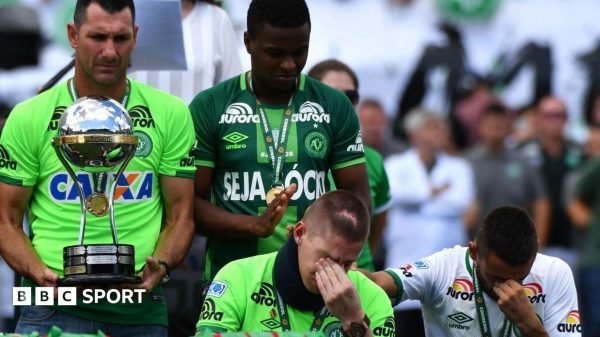
Seven thousand kilometres away in the small southern Brazilian city of Chapeco, Tozzo watched the scale of the disaster unfold on TV screens at the stadium in the middle of the night.
“At five o’clock in the morning, the players’ wives began to arrive. It was despair. People threw themselves on the ground and cried,” says Tozzo, a local entrepreneur who was the club’s vice-president at the time and had joined the club in 2009 when they were not even playing in Brazil’s national football pyramid.
Two days earlier, Tozzo had suffered misgivings about the trip that were so strong that he had changed his mind about travelling to Medellin.
“It was a thing from God. It was not for me to go. I called [financial director] Decio, who organised all our trips, and I told him that I would not go,” he says.
“He went crazy with me. ‘Why? You agreed to go, now you do not want to go? You have to go.’
“My sister was next to me, saying, ‘You need to go to this match, you worked so hard to get to this moment.’ But in my head I said, ‘No Ivan, I will not go’, and I stayed at home.”
After the crash, he had another strong feeling about his path.
“I think I had a mission here on Earth to continue Chapecoense after the accident,” Tozzo says. “I was the only one of the directors left alive so I took over as [interim] president.”
A sleepless week followed in which Tozzo arranged flights to Colombia for doctors, relatives and pastors to identify and recover the remains and be with the survivors.
A memorial service was organised and, in pouring rain, the coffins were brought into Chape’s stadium, Arena Conda.
During the service came the news that Atletico Nacional had asked for the Copa Sudamericana trophy and winners’ prize money to be awarded to Chapecoense.
Then came the question of the future.
Tozzo was determined Chapecoense would compete again, but none of the surviving players were in any shape to play and they only had two other squad members – who did not travel to Medellin because of injury – and a handful in the academy.
They called on Rui Costa, who had been sacked by Gremio as football director six months earlier and accepted the same role with Chapecoense, and appointed Vagner Mancini as coach.
In a matter of weeks, 22 new players were signed, most of them on loan.
Tozzo’s message rang clear in the ears of the new players.
“Our fans were very sad, Chapecoense was very sad, and playing again with joy was not easy,” he says.
“We explained very well the responsibility they would have.”
It was time to return to the pitch.